
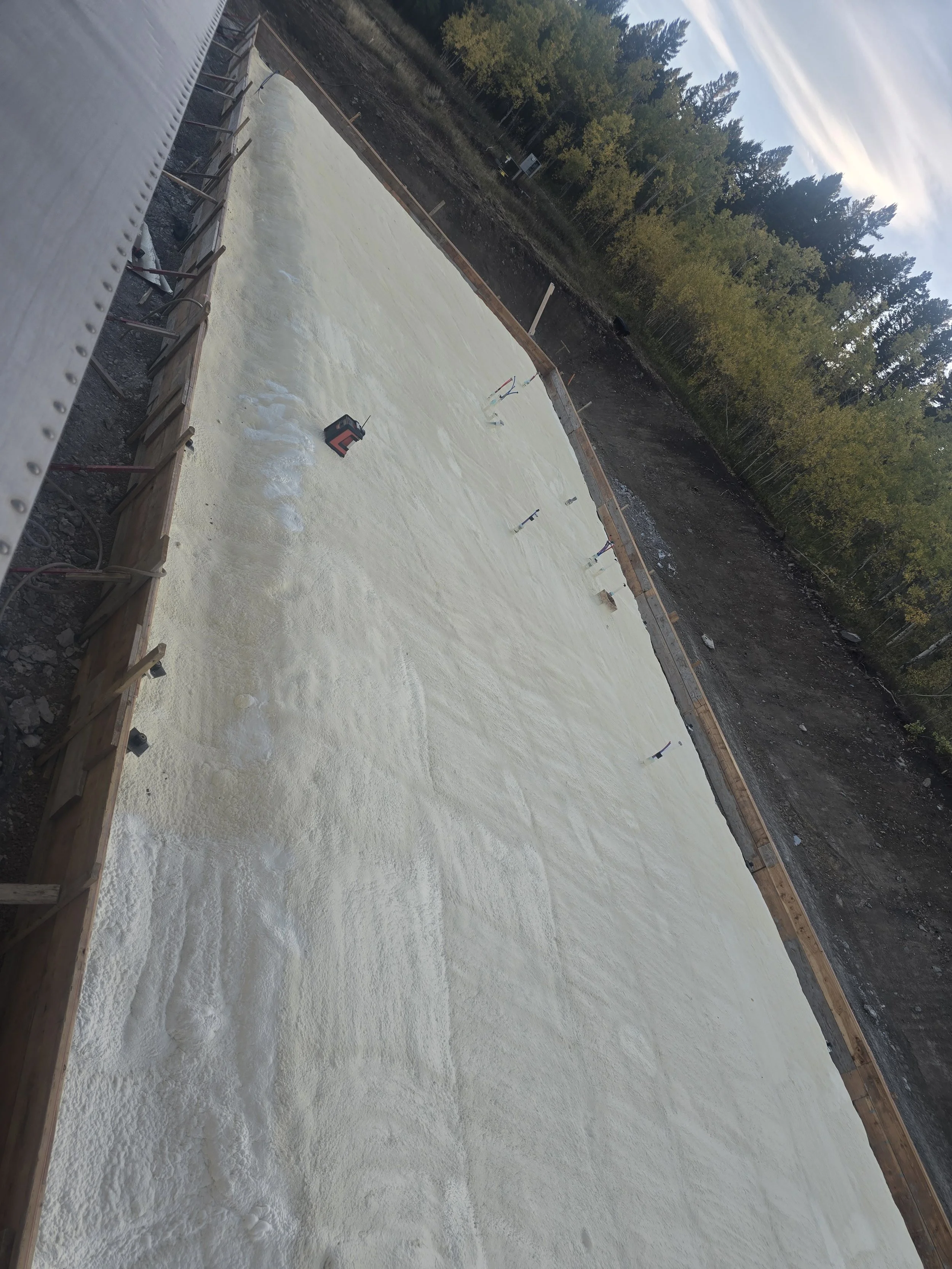
Spray Foam Insulation in West Yellowstone Montana
Epic Foam provides professional spray foam insulation installation in West Yellowstone, Montana and throughout Gallatin County and Southwest Montana. Buildings in the West Yellowstone area experience some of the coldest winter conditions in Montana, along with heavy snowfall and long periods of sustained cold temperatures.
Because of the region’s high elevation and proximity to Yellowstone National Park, homes, cabins, lodges, and commercial buildings often face extreme winter conditions that place significant demands on insulation systems and building envelopes.
Epic Foam specializes in closed cell spray foam insulation for residential, commercial, and agricultural buildings throughout West Yellowstone and Gallatin County. We install insulation systems in homes, vacation cabins, garages, heated shops, metal buildings, and lodging facilities throughout the Yellowstone region.
Epic Foam is an SPFA member and SPFA PCP certified installer, meaning our installation practices follow the professional standards established by the Spray Polyurethane Foam Alliance. Spray foam insulation is created through a controlled chemical reaction between two liquid components that expand and cure into rigid polyurethane insulation. Because this process is sensitive to environmental conditions, Epic Foam treats spray foam installation as a controlled environmental process to ensure consistent foam performance.
Environmental Control During Spray Foam Installation
Winter temperatures in West Yellowstone frequently drop well below zero, which can significantly affect building materials during construction. Proper environmental preparation is critical to ensure spray foam performs correctly.
Epic Foam uses large indirect heaters and environmental conditioning equipment to bring buildings into the proper temperature range before installation begins.
Indirect heaters allow framing, sheathing, and structural components to be warmed evenly without introducing combustion gases or excess moisture into the building environment. This helps ensure the foam chemistry occurs under proper conditions for correct expansion and bonding.
During installation we monitor:
• substrate temperature of framing and sheathing
• humidity levels inside the structure
• temperature of foam components
• airflow and curing conditions
Maintaining these conditions ensures the foam expands properly and bonds securely to building materials.
West Yellowstone Climate and Delta-T Conditions
West Yellowstone sits at approximately 6,700 feet elevation, making it one of the coldest towns in Montana during winter months. Long periods of sustained cold temperatures create extreme temperature differences between indoor and outdoor environments.
A typical winter day in West Yellowstone may include:
Morning temperature
-15°F
Afternoon temperature
5°F
Evening temperature
-10°F
If a building is heated to approximately 68–70°F, this can create temperature differences of 65–85 degrees between indoor and outdoor conditions.
These temperature differences are referred to as delta-T, and they have a major impact on insulation performance.
Traditional insulation materials such as fiberglass rely on trapped air pockets to slow heat transfer. Under large temperature differences, air movement within insulation cavities can increase, allowing heat to move more rapidly through the building envelope.
Closed cell spray foam insulation performs differently because it forms a continuous air barrier, preventing air movement within wall and roof assemblies.
Air Changes Per Hour and Energy Efficiency
One of the largest performance differences between fiberglass insulation and spray foam insulation is the effect on air changes per hour (ACH) within a building.
Fiberglass insulation primarily slows conductive heat transfer but does little to stop uncontrolled air leakage through framing joints, electrical penetrations, and roof assemblies. As a result, buildings insulated with fiberglass often experience higher air exchange rates with outdoor air.
Closed cell spray foam expands into seams, cracks, and structural joints, dramatically reducing uncontrolled air leakage.
Reducing air changes per hour can provide several benefits:
• significantly lower heating energy demand
• more stable indoor temperatures
• improved indoor air quality
• fewer drafts and cold spots
In extremely cold climates like West Yellowstone, reducing uncontrolled air movement can dramatically improve energy efficiency and indoor comfort.
Sealed Roof Systems for Cold Climate Performance
Many traditional roof assemblies insulated with fiberglass or cellulose require attic ventilation to manage temperature and moisture conditions. These ventilation openings create pathways where wind-driven snow, dust, insects, and rodents can enter attic spaces, particularly in windy winter conditions.
Closed cell spray foam insulation allows buildings to utilize a sealed roof assembly, where foam is applied directly to the underside of roof sheathing. This eliminates the need for traditional attic ventilation and creates a continuous air barrier throughout the roof structure.
Benefits of sealed spray foam roof systems include:
• elimination of attic vent openings where wind-driven snow and debris can enter
• reduced pathways for dust, insects, and rodents to enter the building
• improved thermal performance by eliminating air movement within roof cavities
• increased structural rigidity due to foam bonding to framing and sheathing
Closed cell spray foam bonds directly to roof sheathing and framing members, increasing the overall rigidity of the roof structure. This bonding allows the roof system to behave more like a unified assembly rather than separate components.
Custom Foam Depth for Each Project
Epic Foam designs insulation systems based on the specific needs of each building rather than applying a single insulation thickness everywhere. Determining the appropriate foam depth requires evaluating several factors including:
• building heating patterns
• indoor temperature expectations
• roof and wall assembly design
• exposure to wind and snow loads
• daily temperature swings
Buildings that remain heated year-round—such as homes, lodges, and commercial buildings—often require deeper insulation levels to maintain energy efficiency in extremely cold environments.
By evaluating expected delta-T conditions in West Yellowstone and Gallatin County, Epic Foam determines the appropriate foam thickness for each project.
Buildings We Commonly Insulate in West Yellowstone
Epic Foam installs spray foam insulation in many building types throughout West Yellowstone and Gallatin County including:
Mountain homes
Vacation cabins
Lodges and rental properties
Garages and heated workshops
Metal buildings
Pole barns
Commercial buildings
Closed cell spray foam insulation helps reduce heat loss, improve indoor comfort, and control condensation within wall and roof assemblies.
Spray Foam Designed for Yellowstone Region Buildings
Epic Foam combines industry certification, building science expertise, and specialized equipment to ensure spray foam insulation systems perform correctly in Montana’s harshest climates.
By controlling environmental conditions during installation and designing insulation systems tailored to each building, Epic Foam delivers insulation solutions built specifically for West Yellowstone, Gallatin County, and the greater Yellowstone region of Southwest Montana.
If you are planning a new build or insulation upgrade in West Yellowstone or anywhere in Gallatin County, Epic Foam can help determine the best spray foam insulation system for your project.
Nearby Spray Foam Service Areas
Spray Foam Insulation Ennis MT
Spray Foam Insulation Gallatin Gateway MT
Spray Foam Insulation Bozeman MT
Spray Foam Insulation Belgrade MT