
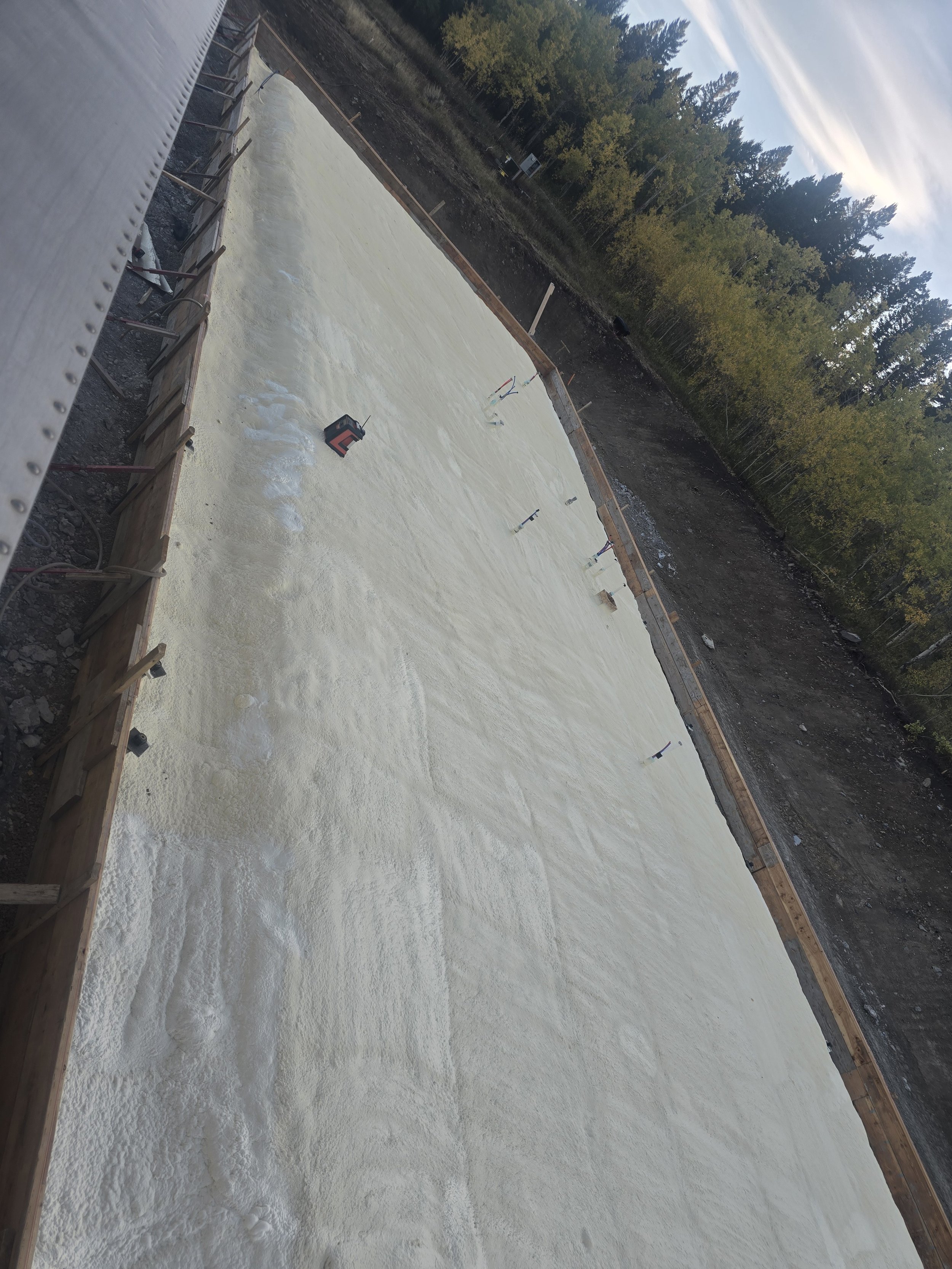
Spray Foam Insulation for Rural Montana Homes, Ranches, and Cabins
Epic Foam provides professional spray foam insulation installation for rural homes, cabins, ranch buildings, and agricultural structures throughout Montana. Many properties across rural Montana are located far from towns, utilities, and services, which makes energy efficiency and building reliability extremely important.
Homes and ranch buildings in remote areas often rely on propane, wood heat, solar systems, generators, or other alternative energy sources. In these situations, inefficient insulation can quickly increase fuel consumption and operating costs.
Epic Foam specializes in closed cell spray foam insulation systems designed for rural and off-grid buildings, helping property owners reduce heating demand while improving comfort and building durability.
Epic Foam is an SPFA member and SPFA PCP certified installer, meaning our installation methods follow professional standards established by the Spray Polyurethane Foam Alliance. Spray foam insulation is created through a controlled chemical reaction between two liquid components that expand and cure into rigid polyurethane insulation.
Because this process is sensitive to environmental conditions, Epic Foam approaches spray foam installation as a controlled environmental process to ensure consistent foam performance.
Energy Efficiency for Off-Grid Living
Many rural Montana homes operate independently from traditional utilities. Buildings may rely on propane tanks, wood stoves, solar panels, battery systems, or generators for heat and electricity.
In these situations, insulation performance directly affects how much energy a building consumes. Poorly insulated buildings require more fuel, larger solar systems, and more frequent trips to town for supplies.
Closed cell spray foam insulation helps reduce energy demand by creating a continuous air barrier and high-performance thermal envelope.
Improving insulation efficiency can provide several benefits for rural homes:
• lower propane or heating fuel consumption
• smaller solar or battery systems required
• reduced generator runtime
• longer intervals between fuel deliveries
• more consistent indoor temperatures
For many rural property owners, improving building efficiency is one of the most effective ways to reduce long-term operating costs.
Air Changes Per Hour and Heat Loss
Traditional insulation materials such as fiberglass or cellulose slow conductive heat transfer but allow air movement through framing joints, electrical penetrations, and structural seams. This uncontrolled air leakage increases air changes per hour (ACH) inside a building.
Higher air exchange rates mean heated air escapes the building and cold outside air replaces it, increasing heating demand.
Closed cell spray foam expands into cracks, seams, and structural joints, dramatically reducing uncontrolled air leakage.
Reducing air changes per hour can provide several benefits:
• reduced heating fuel consumption
• fewer drafts and cold spots
• improved indoor air quality
• better indoor temperature stability
For off-grid homes where heating fuel and electrical power are limited resources, reducing air leakage can significantly improve overall energy efficiency.
Reliable Buildings During Harsh Winter Conditions
Many rural Montana areas experience extreme winter weather, heavy snowfall, and extended periods of cold temperatures. During severe storms, roads can become difficult to travel or temporarily inaccessible.
In remote areas, homeowners may need to rely on stored fuel supplies for extended periods if travel conditions prevent resupply. Buildings that lose heat quickly can place additional strain on these limited energy resources.
Closed cell spray foam insulation helps maintain a tight building envelope, reducing heat loss and improving indoor comfort even during long cold periods.
For rural homeowners who may occasionally be snowed in for days or weeks, energy efficiency becomes a critical part of maintaining safe and comfortable living conditions.
Agricultural Buildings and Livestock Protection
For many rural Montana properties, buildings are not only used for living space but also for livestock operations and agricultural work. Barns, calving sheds, equipment shops, and livestock shelters must perform reliably during extreme winter temperatures.
Cold conditions can create serious challenges for ranch operations, including:
• livestock needing consistent access to feed and water
• water systems freezing during extreme cold
• increased heating demand in calving or lambing areas
• equipment reliability during severe weather
Closed cell spray foam insulation can help agricultural buildings maintain more stable interior temperatures, reducing the effects of extreme outdoor conditions.
Benefits of spray foam insulation in agricultural buildings include:
• reduced heat loss in livestock shelters and barns
• improved temperature stability during cold weather
• reduced drafts inside animal housing areas
• improved energy efficiency for heated agricultural buildings
In extreme winter conditions, maintaining reliable buildings helps ensure livestock can be fed, watered, and protected from severe weather.
Sealed Roof Systems for Rural Buildings
Many traditional roof assemblies insulated with fiberglass or cellulose require attic ventilation. These vent openings create pathways where dust, insects, rodents, and outside air can enter attic spaces.
Closed cell spray foam insulation allows buildings to utilize a sealed roof assembly, where foam is applied directly to the underside of roof sheathing. This eliminates the need for traditional attic ventilation and creates a continuous air barrier across the roof structure.
Benefits of sealed spray foam roof systems include:
• fewer entry pathways for dust, insects, and rodents
• improved thermal performance by eliminating air movement in roof cavities
• reduced heat loss during cold winter conditions
• increased structural rigidity due to foam bonding to framing and sheathing
Closed cell spray foam bonds directly to roof sheathing and framing members, allowing the roof system to behave more like a unified structural assembly.
Custom Insulation Design for Rural Buildings
Epic Foam designs insulation systems based on the specific needs of each building rather than applying a single insulation thickness everywhere. Determining the proper foam depth requires evaluating several factors including:
• heating system type
• solar or alternative energy capacity
• building design and construction
• elevation and climate conditions
• expected winter temperature differences
Off-grid homes often benefit from deeper insulation levels to reduce long-term heating demand and improve energy system efficiency.
By evaluating expected delta-T conditions and energy system limitations, Epic Foam helps determine the appropriate insulation design for each rural building.
Buildings We Commonly Insulate in Rural Montana
Epic Foam installs spray foam insulation in a wide range of rural structures throughout Montana including:
Off-grid homes
Mountain cabins
Remote hunting cabins
Ranch homes
Garages and heated workshops
Metal buildings
Pole barns
Livestock barns and agricultural buildings
Closed cell spray foam insulation helps reduce heat loss, improve comfort, and increase energy efficiency in buildings located far from traditional utilities.
Spray Foam Designed for Rural Montana Living
Epic Foam combines industry certification, building science expertise, and specialized equipment to ensure spray foam insulation systems perform correctly in Montana’s demanding environments.
By designing insulation systems specifically for rural homes, ranches, and agricultural buildings, Epic Foam helps property owners reduce energy demand, improve comfort, and make remote living more efficient and reliable.
If you are building or upgrading a rural home, cabin, ranch building, or shop anywhere in Montana, Epic Foam can help design an insulation system suited for off-grid and remote conditions.
Nearby Spray Foam Service Areas
Spray Foam Insulation Whitehall MT
Spray Foam Insulation Dillon MT
Spray Foam Insulation Bozeman MT
Spray Foam Insulation Helena MT