
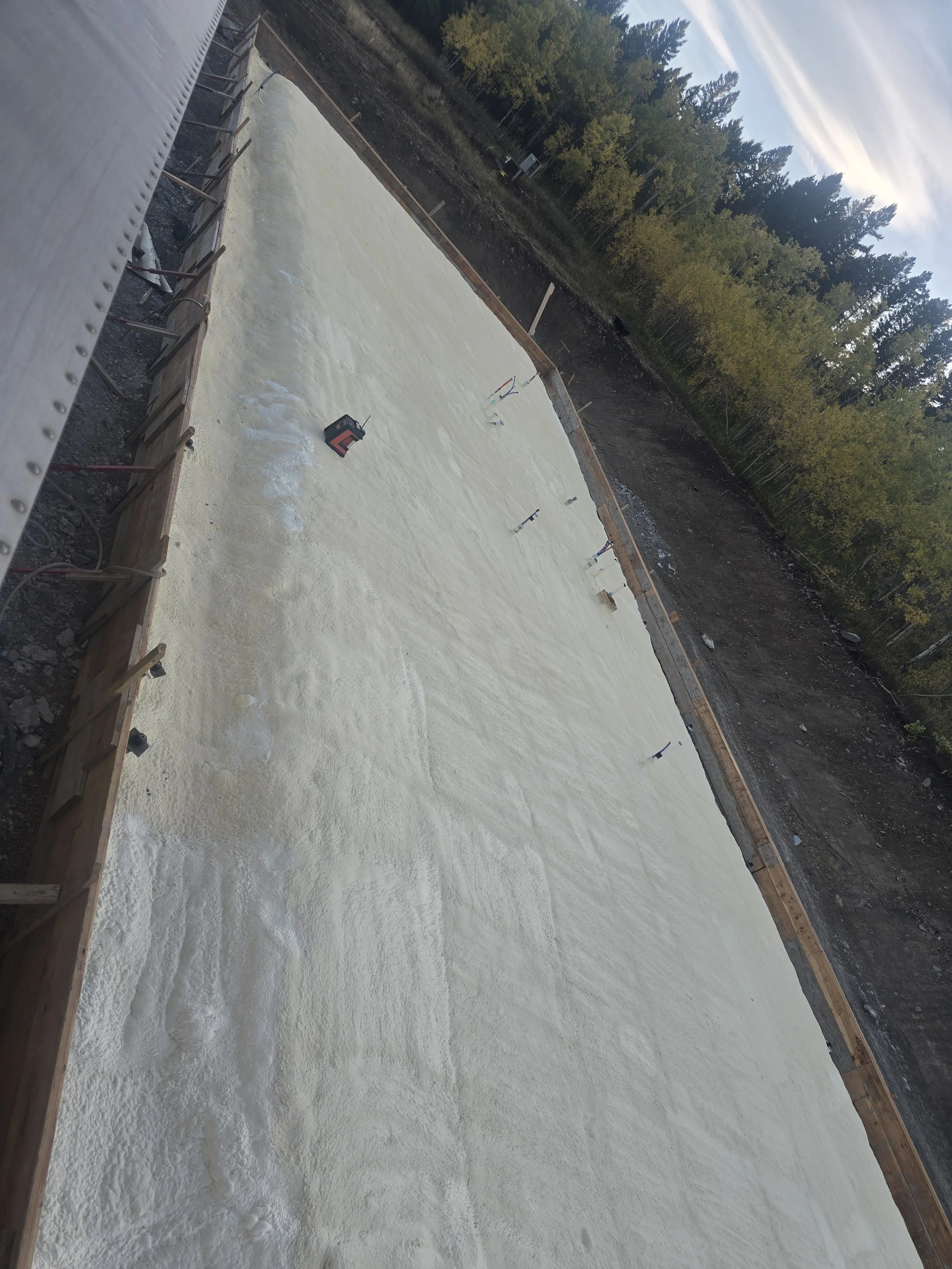
Spray Foam Insulation for Metal Buildings and Barndominiums in Montana
Metal buildings and barndominiums are becoming increasingly popular across Southwest Montana for homes, shops, and agricultural buildings. These structures offer durability and fast construction, but insulating steel buildings properly requires specialized knowledge and installation techniques.
Closed cell spray foam insulation is one of the most effective insulation systems for metal buildings because it bonds directly to the steel surface, creating both a continuous insulation layer and an air barrier.
Epic Foam installs closed cell spray foam insulation in metal buildings and barndominiums throughout Southwest Montana, including Bozeman, Butte, Dillon, and surrounding rural communities. Proper installation is critical when working with steel structures, particularly with lighter gauge metal commonly used in building panels.
Special Installation Techniques for Metal Buildings
Steel building panels are commonly manufactured from 26 gauge or 29 gauge steel, which can be sensitive to improper spray foam installation techniques.
If spray foam is applied incorrectly, excessive pressure from expanding foam can distort the metal panels and create a condition known as oil canning, where the steel surface becomes visibly wavy.
To prevent this, spray foam must be applied using controlled passes and proper installation sequencing that minimizes pressure against the metal panels while still achieving the required insulation thickness.
Proper installation also requires verifying that all steel panels are fully screwed off and secured to the building frame before foam is applied. If panels are not properly fastened, expanding foam pressure can push the metal outward.
Epic Foam carefully inspects building assemblies before installation to ensure the structure is ready for spray foam application.
Direct Bonding to Steel Panels
Closed cell spray foam insulation performs best when it is sprayed directly onto the steel surface without additional materials between the foam and the metal.
Installing materials such as:
• drip stop fabrics
• house wrap
• other barrier materials
between the steel panels and spray foam prevents proper adhesion and reduces the structural benefits of the foam.
When applied directly to steel, closed cell spray foam bonds to the panel and framing members, creating a continuous insulated surface that improves durability and structural rigidity.
This direct bond helps the building behave more like a unified structural system, increasing the overall strength of the wall and roof assemblies.
Controlling Foam Expansion at Panel Profiles
Steel building panels contain profile openings along the base of the wall where the metal meets the foundation. If these openings are not properly sealed before spraying, expanding foam can push through the panel profile and expand to the exterior of the building.
To prevent this, foam closure strips or blocking materials must be installed in the panel profiles before spraying begins.
These foam strips seal the openings and prevent expanding foam from escaping through the steel profile, ensuring the insulation remains inside the building envelope.
This small step prevents unnecessary cleanup and ensures a professional finished installation.
Condensation Control During Installation
Condensation can form quickly on steel surfaces when warm interior air contacts cold metal panels. This is especially common during winter construction in Montana.
If condensation forms on the steel while spray foam is being applied, it can interfere with proper adhesion between the foam and the metal surface.
To prevent this, the building environment must be carefully controlled before and during installation.
Epic Foam uses large indirect heaters and controlled jobsite conditions to warm steel panels and framing members to the proper temperature before spraying begins. Indirect heaters allow the structure to be warmed evenly without introducing combustion gases or excess moisture into the building environment.
Maintaining proper substrate temperature ensures the foam bonds correctly to the steel and cures properly.
Delta-T and Metal Buildings in Montana
Metal buildings often experience significant temperature differences between the interior and exterior of the structure during winter.
For example:
Outside temperature
0°F
Interior heated temperature
70°F
This creates a 70 degree delta-T, which can drive heat loss through poorly insulated building envelopes.
Fiberglass insulation often allows air movement inside the wall cavity, which reduces its effectiveness under these conditions.
Closed cell spray foam eliminates air movement within the insulation system, helping the building maintain more stable interior temperatures and improved energy efficiency.
Applications for Metal Buildings and Barndominiums
Epic Foam installs spray foam insulation in a wide range of steel building structures across Southwest Montana including:
• metal shop buildings
• garages and workshops
• barndominiums
• agricultural buildings
• equipment storage buildings
Closed cell spray foam insulation improves energy efficiency, reduces condensation, and increases structural durability in steel building systems.
Spray Foam for Montana Steel Buildings
Metal buildings require careful installation practices to ensure the insulation performs correctly and the steel structure remains protected.
Epic Foam combines SPFA PCP certification, professional equipment, and industry experience to ensure spray foam insulation is installed properly in steel buildings throughout Southwest Montana.
By controlling environmental conditions and using installation methods designed specifically for steel structures, Epic Foam delivers spray foam insulation systems built to perform reliably in Montana’s demanding climate.
Nearby Spray Foam Service Areas
Spray Foam Insulation Bozeman MT
Spray Foam Insulation Butte MT
Spray Foam Insulation Dillon MT
Spray Foam Insulation Whitehall MT